Water carry
3L Hydration Pack
Useful for exposed desert routes where one small bottle is not enough.
View hydration packsRed Rock Canyon, Las Vegas
3.93 miles • Easy • Trail
Conditions, access, and regulations can change. Always verify current information and assess safety before visiting.
Offline maps coming soon. Be first to access downloadable routes.
Some listings may be paid partnerships.
Know a useful stop near this trail? Suggest a business
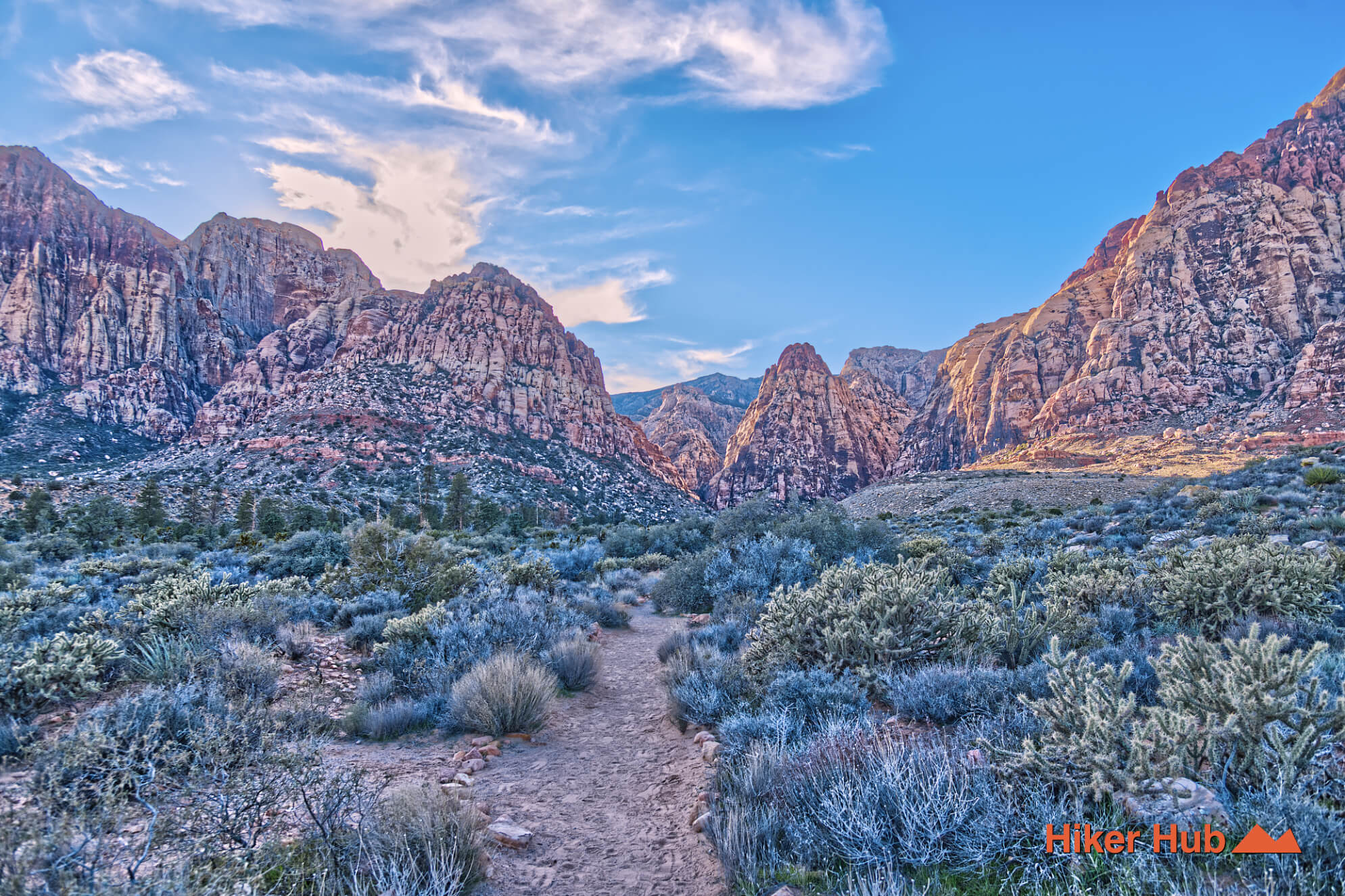
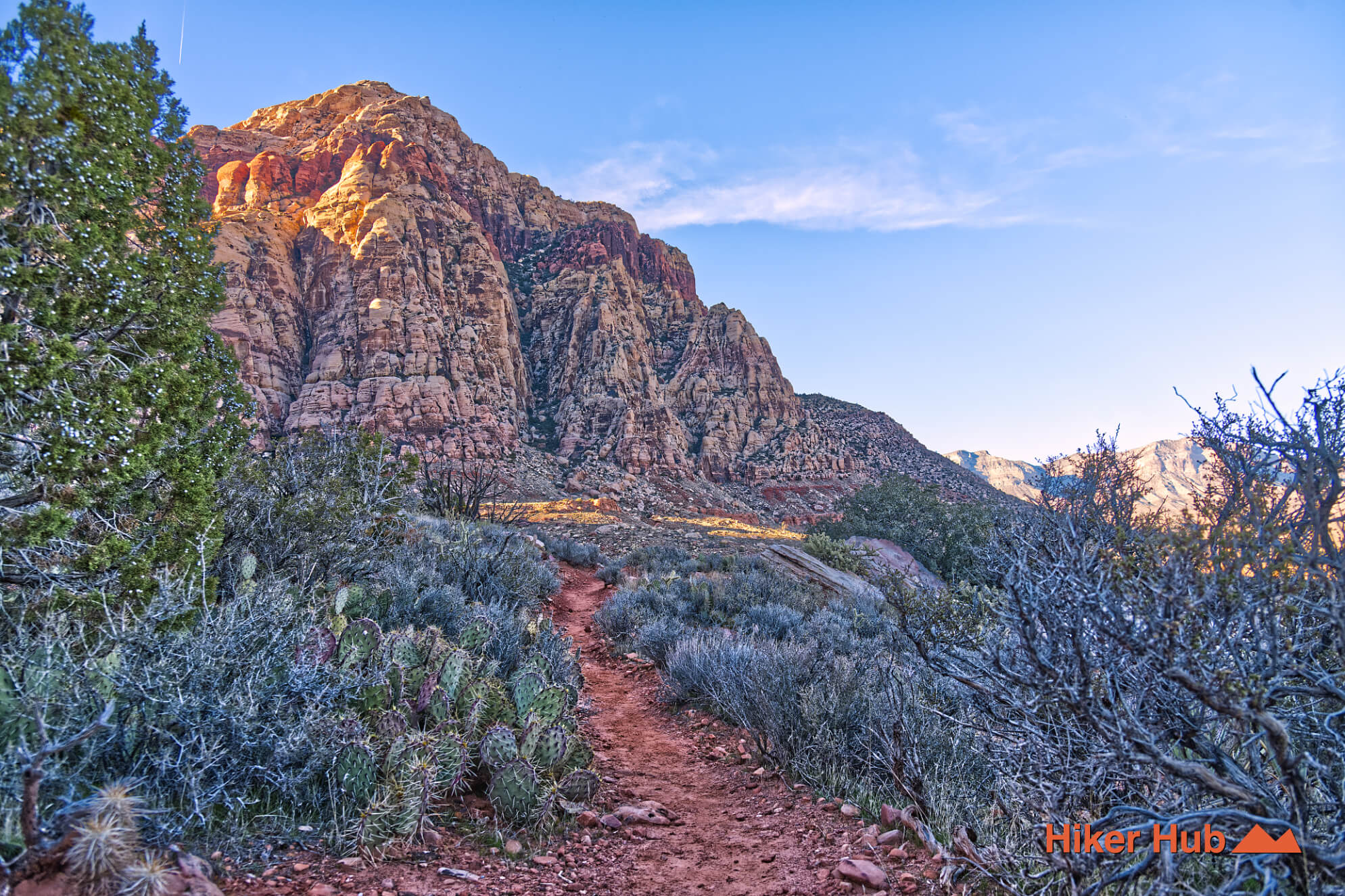
Pine Creek Canyon Trail begins late in the Red Rock Canyon Scenic Loop, where the road is already beneath the great western escarpment. The hike starts in open desert, descends toward the canyon, and becomes greener as seasonal Pine Creek, shaded soil, and the surrounding walls concentrate moisture. Mescalito rises from the center of the canyon, the Wilson Cliffs dominate the horizon, and remnants of the old Wilson homestead add a human-history layer to one of the most ecologically varied Red Rock Canyon hikes.
From the parking area, the trail heads downhill toward the mouth of Pine Creek Canyon. The main corridor intersects the Fire Ecology route and Dale’s Trail before reaching the old homestead foundation and the Pine Creek Loop. Hikers can complete a straightforward out-and-back, follow the official loop, or build a longer connection with Arnight Trail and the Oak Creek system.
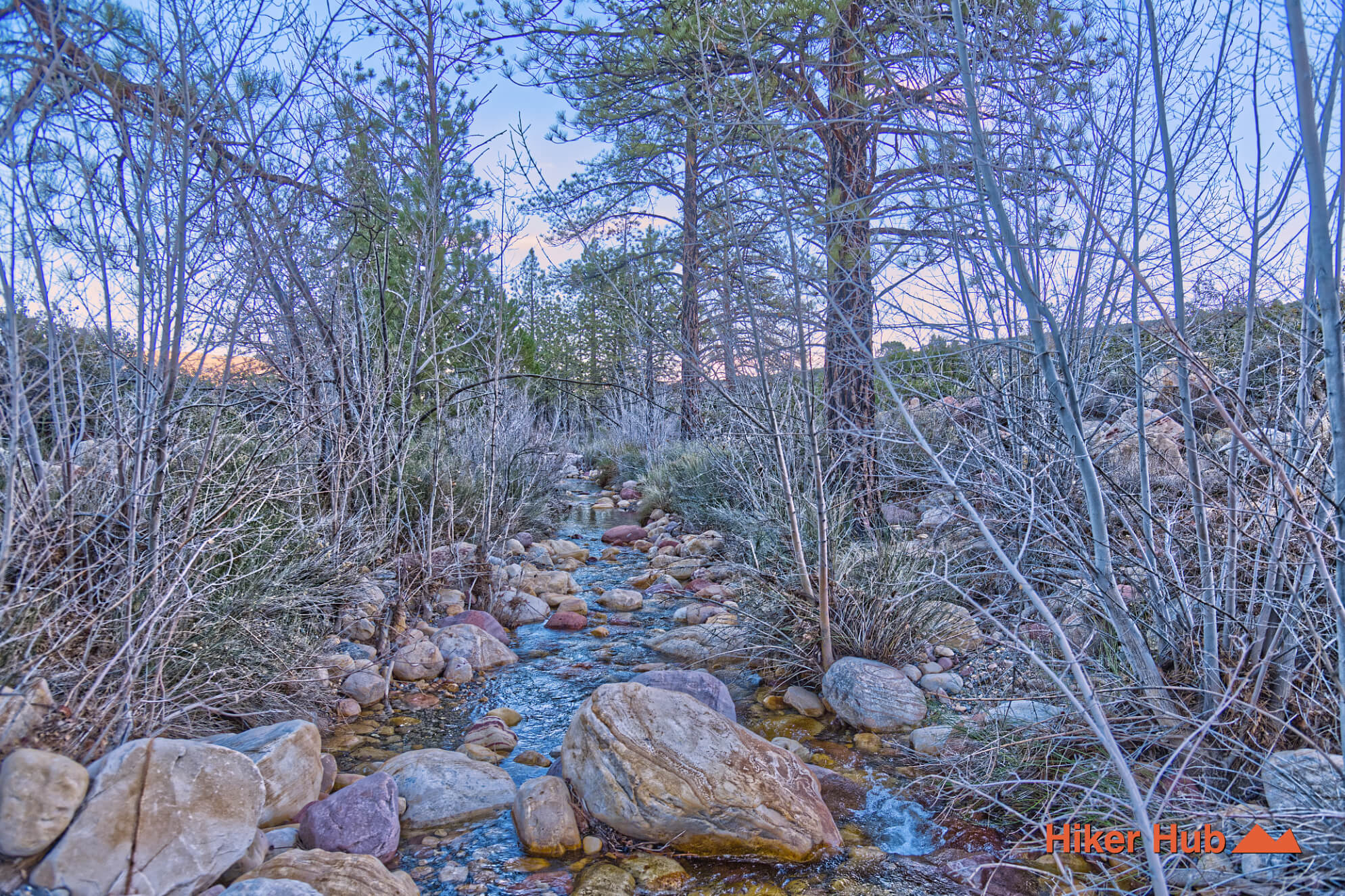
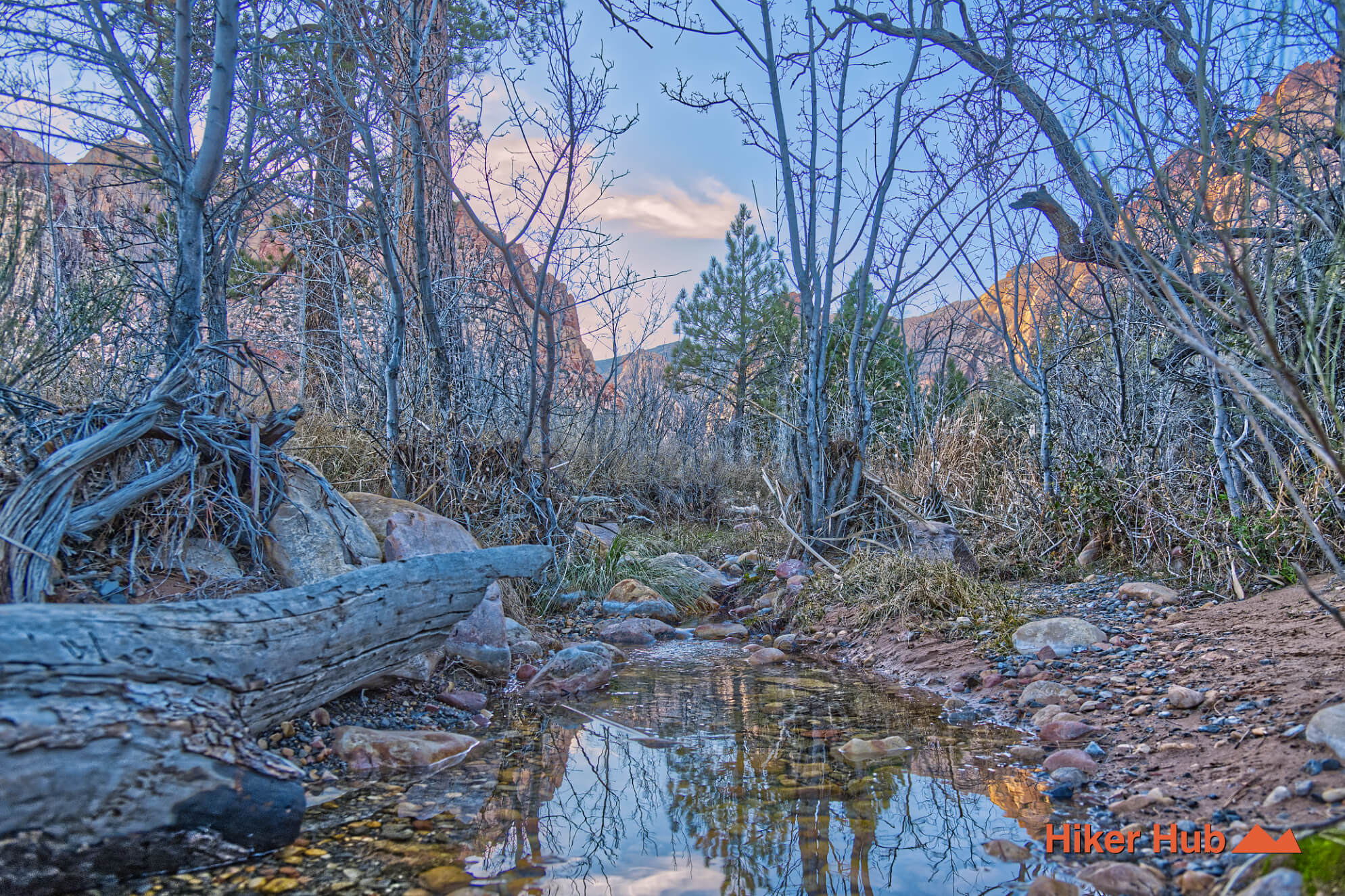
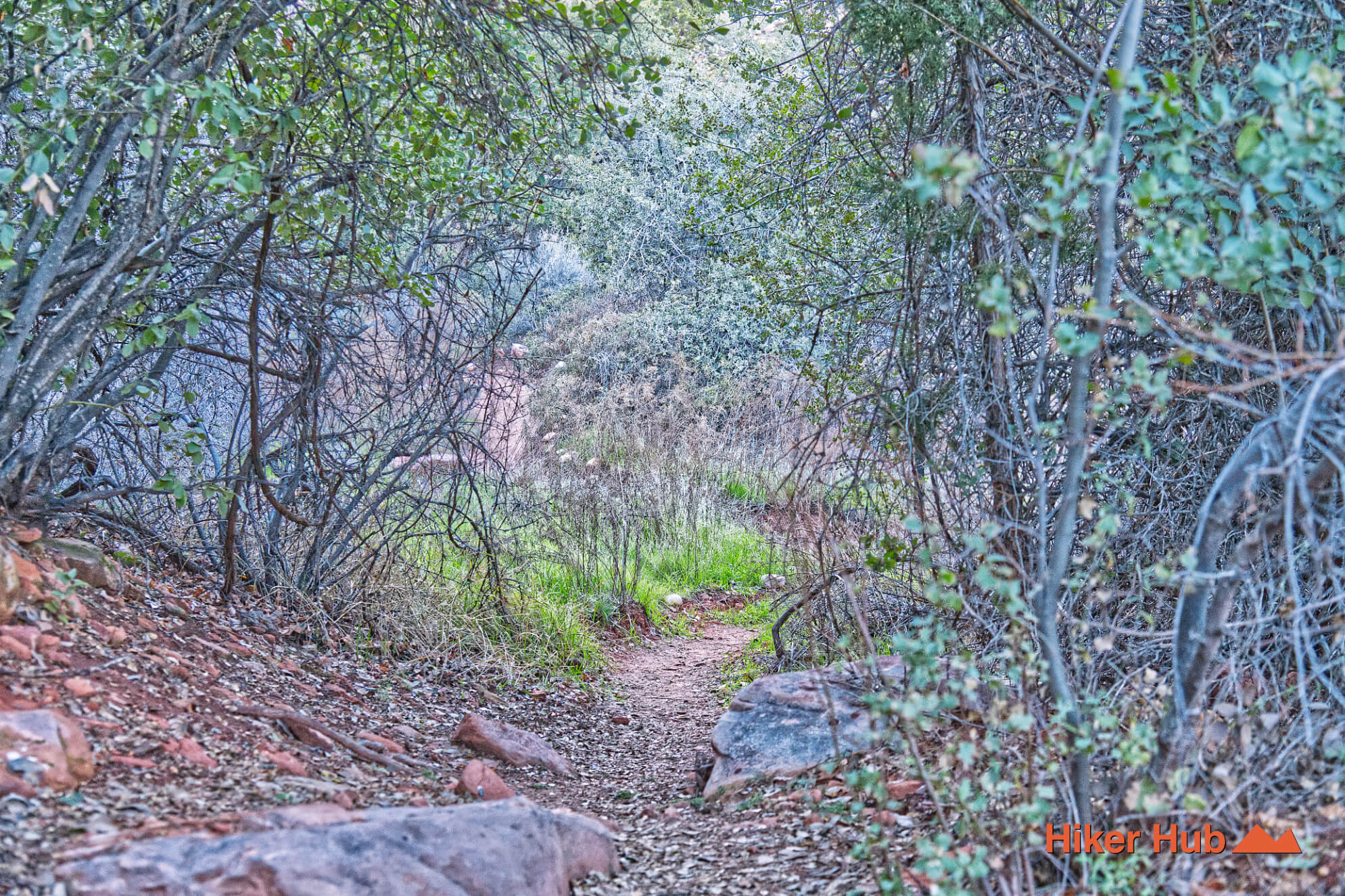
The approach is broad and exposed, but the character changes near the creek. Cottonwoods, willows, shrubs, grasses, and ponderosa pines appear in pockets where water and shade persist. This Pine Creek field video shows why the route feels progressively more secluded and green even though it begins beside one of the most visited roads in Red Rock Canyon Nevada.
Pine Creek is seasonal rather than guaranteed. Flow depends on recent storms, snowmelt, groundwater movement, and the ability of canyon sediments and fractured rock to hold moisture. The drainage supports a riparian corridor that is disproportionately rich compared with the surrounding Las Vegas desert. That contrast makes the trail useful for birdwatching, plant observation, and understanding how natural springs and creeks shape desert wildlife habitat.
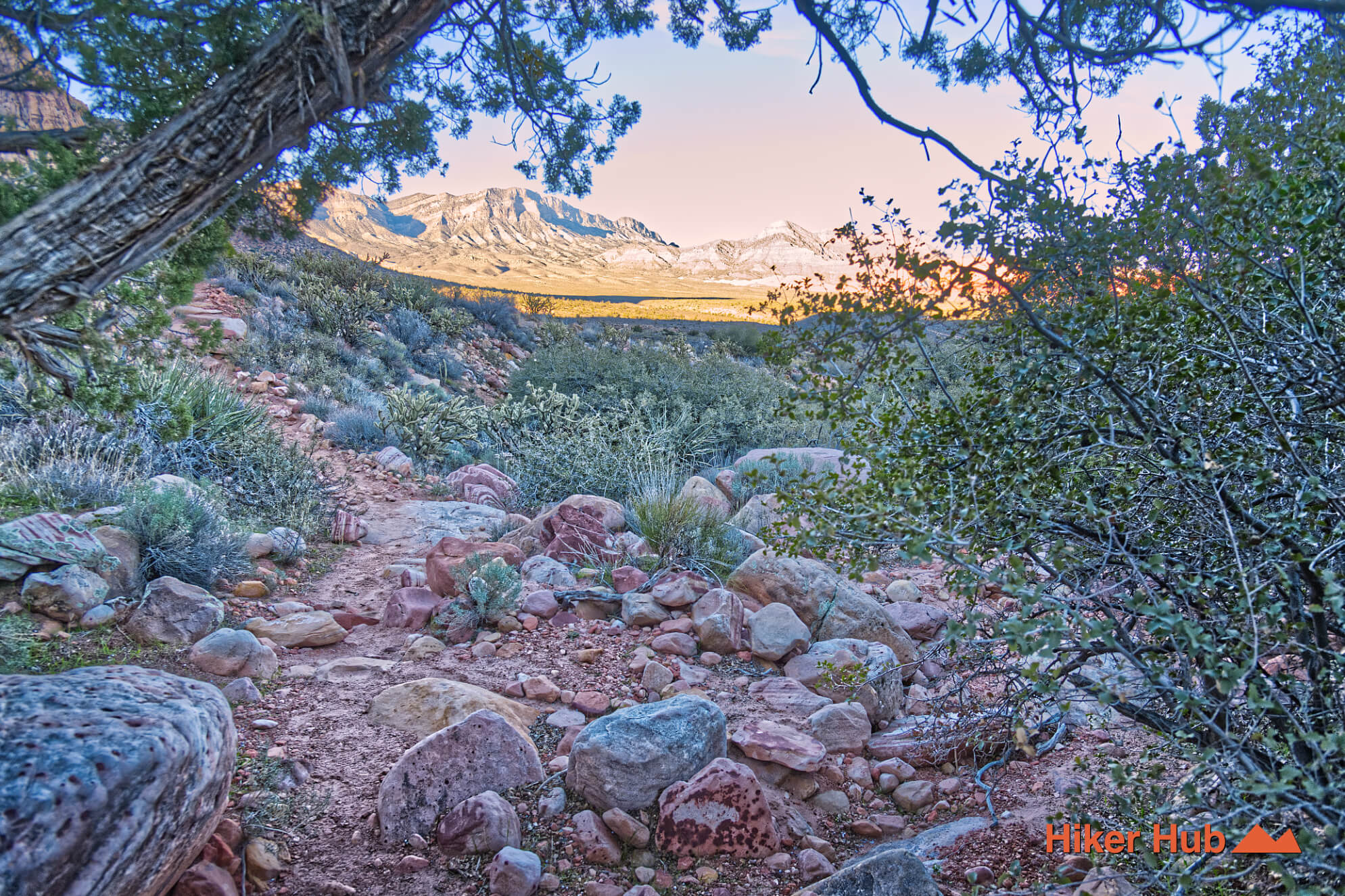
Mescalito—the compact sandstone peak inside the canyon—is the visual centerpiece. Its layered, weathered walls belong to the same Jurassic Aztec Sandstone system that forms much of the Red Rock escarpment. Wind once built enormous dunes here; burial and mineral cement later transformed those dunes into stone. The curving crossbeds and warm colors are visible in this Red Sandstone photo story, while this Mt. Wilson Overlook photograph show the scale of the cliffs around the southern canyon country.
Near the loop, hikers encounter the foundation of the historic Wilson homestead. The remaining structure is modest, but it places the trail within a period when ranching, prospecting, and settlement reached into valleys that now feel wild. Leave masonry, metal, glass, and other historic material where it lies. Modern visitors are not the first people drawn to this water-rich canyon; Indigenous communities used Red Rock’s springs, plants, wildlife, shelters, and stone resources for thousands of years.
Climbers also use Pine Creek as an approach to major walls and canyon systems. It's common to see people high above the trail on routes that appear almost impossibly steep. Hiking farther toward Fern Canyon, Juniper Canyon, Bridge Mountain, or technical climbing objectives requires skills far beyond the maintained Pine Creek loop.
Pine Creek is ideal for families comfortable on rocky trail, visitors seeking a moderate outing, photographers, and hikers who want more shade and biological diversity than the open Calico country. Good hiking shoes help on creek crossings, loose rock, and the uneven backside of the loop. The trailhead can be busy in cool weather, but people disperse among the loop, climbing approaches, Fire Ecology, and Dale’s Trail. It's normally less concentrated than Calico Tanks, while still far from a guaranteed solitude hike.
Late autumn through spring is strongest. Winter and early spring provide the best chance of flowing water, while fall brings warm light and comfortable temperatures. Summer hiking should begin very early; canyon shade does not protect the exposed approach. Avoid washes during storms, and give wet sandstone time to dry before scrambling or climbing on it.
For travelers researching hiking in Las Vegas, Pine Creek is one of the best places for nature, photography, introspection, and a broad introduction to Red Rock Canyon geology. It feels increasingly remote without requiring the sustained summit effort of Turtlehead Peak or North Peak.
Recommended gear
Gear picks are matched to this route using distance, difficulty, terrain, and desert conditions.
Disclosure: some links may be affiliate links. Red Rock Hiker Hub may earn a commission at no extra cost to you.
Water carry
Useful for exposed desert routes where one small bottle is not enough.
View hydration packsShade
Simple shade matters on open desert terrain, sandstone slabs, and long approaches.
View hiking hatsSun protection
A lightweight sun layer is one of the most useful pieces of gear for Red Rock exposure.
View sun hoodiesFooting
Better traction helps on loose gravel, sandstone, rocky washes, and steeper trails.
View trail shoesHeat support
Helpful on hot days, longer hikes, and steep routes where plain water may not be enough.
View electrolytesSkin protection
Small, easy to carry, and useful on nearly every Southern Nevada trail.
View SPF essentials